Friday, July 15, 2011

L.A. Noir

Written by Joe the Revelator


Rockstar, the makers of Grand Theft Auto, have come a long way from ultra violent hooker-killing mobster games. They've veered away from rewarding players for driving over pedestrians, incinerating bystandards, and kicking in the nuggets of carjack victims, and have started penalizing such chaotic behavior in LA Noir. After all, you're the police.

ALthough thanking L.A. Noir for being more mature than a GTA game set in the 1940's is like giving a treat to a pitbull for not mauling toddlers. In LA Noir you play as a flatfoot cop who has just made detective, Cole Phelps. Your primary mission is to watch a cutscene of a crime being committed in 3rd person, arrive on the scene the next morning as the detective, and fumble around the evidence while listening to the keys of the grand piano playing in your head. Instead of highlighting usable objects, as in most games, LA Noir plays chords on the piano to indicate when you're near a piece of potential evidence. The Great Piano points you toward soup cans, spoons, cerial boxes, and other assorted trash, and in rare occasions; murder weapons and other incriminating information.

After the evidence is gathered and taken down in your trusty notepad (quest log/journal) it's up to you to question the witnesses. It's here that the game sports its highly developed facial models, which are so sensitive to human expressions it can render readable emotions. Characters squirm when they lie to you, or avert eye contact, or attempt to obfuscate facts. The strength of your case and the experience points you earn are based on how well you can smell out a lie. Is the angry housewife with a dead husband and a new boyfriend; A) Telling the truth, B) dissembling, or C) Lying?


There is no "break his fingers" button.

With the case nearly solved it's time to take witnesses and suspects downtown for some good old fasioned police work. The chief, who was so much ruddy Irish Cop that his gums bled green, tells you to stick it to the suspect, and knock a confession out of him, to "give him lumps". I was expecting a scene from punisher. What I got was Law and Order. There's no button for a hard interrogation. It's more face-watching and accusations.

And finally, when a witness has cracked and given up a name, when the perpetrator's location is spilled, you might get to shoot someone. But so much of LA Noir is cool thinking and good police work that even the highspeed chases can sometimes be delegated to your partner. And one chase is almost identical to the next. The murderer flees out a window, you follow him over a few rooftops or down an ally, and commence investigating his organs with bullets.


Streamline the Truth-Doubt-Lie function to: Doubt-Bullet

Perhaps there's something in the water around Las Angeles, but some supernatural force has turned every potential witness into a pathological liar or a manipulative jackass. By the middle of the game I was convinced everyone was lying, all the time, and I was usually right. Even the underage rape victim had something to lie about. After a game like LA Noir I found myself doubting everyone around me, telling the pizza delivery guy that I couldn't help him if he didn't "come clean".

It may be my love for the genre, but even with the slow pace and the liar's guessing game, I found LA Noir to be exceptional. It was a callback to pulp in the finest sense, like a collection of dimestore detective novels. It was Hollywood and glamour and murder and intrigue, everything that made the era interesting. I would recommend everyone at least try LA Noir.

Tuesday, July 12, 2011

Final Fantasy IV


Fairly recently I found myself replaying Final Fantasy IV. This game has always had a soft spot in my heart; I can remember my pre-10 year old self staying indoors away from the insane Texas heat, popping this into the old Super Nintendo and playing it until I was dragged away by disapproving parents. What is funny was that my copy of this game had a rather nasty flaw; I could never save my game. And so, every time I played it, I would be playing it from the very beginning. Now that is determination.

Thus I never actually finished Final Fantasy IV until I was much older and managed to get my hands on an emulated version (playing it on my computer using a special program). I was afraid that the rose-tinted glasses of times past would be removed and that I would see it now as a piece of adolescent garbage. I feared that I wouldn't be able to tolerate the old-school graphics. And, perhaps most of all, I worried that the story, which I had remembered as fantastic, would be revealed as painfully simple tripe.

But I discovered quickly, in fact, that I had nothing to worry about. And, with this review, I've decided to focus on that story and one special instance of it that made it resonate with me and my much younger self such a long time ago.
.

Dichotomy of Light and Dark

FFIV is set in a fantastical medieval world filled with magic, knights, airships, and all sorts of creatures, terrifying and bizarre. It is a setting typical of the Final Fantasy games; people ride giant yellow ostriches for transportation, throw around gouts of fire and shards of ice as if such things were an everyday occurrence, and take part in stories that are as melodramatic as they are truly epic.

Yet, despite the oddly cheery sound of such a world, it conceals a far darker and complicated tale. In FFIV, we follow a dark knight named Cecil Harvey, a man who works as captain of the airship fleet for the powerful kingdom of Baron. He is commanded by the King to execute raids on neutral territories to gather certain artifacts of power with which Baron can take over the world. The overarching plot of the game involves Cecil turning against the empire he serves in order to, essentially, save the world.

But what is truly interesting about the story is its focus on Cecil. Cecil is a man tormented by what he has done in the name of duty. Perhaps even more important than saving the world is Cecil's need to save himself; first and foremost, this is a story of redemption. And it is an astonishingly hard and painful road. The people of FFIV's world greet Cecil with a truly nasty amount of prejudice and hatred for what he has done, and you can't help but empathize with both sides. After all, this is a man who has ordered entire cities to burn. And yet Cecil's commitment to atoning for his sins is absolute. Even though the limited graphics prevent true indications of emotion, it is clear from the text alone that Cecil is tortured every day by what he has done.
.

The Path to Redemption

This culminates in an arduous trek up the side of a mountain conveniently named Mt. Ordeals. Cecil is told that in order to overcome his past he must reach the summit of Ordeals and “embrace the light”. Despite such vague instructions, Cecil fights tooth and nail to reach the blustery heights, facing some truly disturbing monsters along the way. As he reaches the top, he finds an odd door that takes him into a hallway filled with mirrors. It is here that he must face what he has done.

Now I want to pause here a moment to point out that, in video games, powerful stories with depth are not the norm. In general, the focus is on the gameplay. It is this which makes the Final Fantasy games stand out as exceptional, as they provide greatness in both categories. But it is important to note that in video games we expect that, when faced with a monster or foe, we must fight to defeat it.

When Cecil enters the hallway of mirrors, he is commanded by a disembodied voice to take the sword of the Paladin, which lies at the end of the hall. The moment he does, he is embraced by light which alters his dark armor and replaces it with more benevolent looking regalia. But, at that same moment, a figure steps forth from the mirrors, the reflection of what Cecil fears himself to be; it is a perfect replica of Cecil, adorned entirely in the dark, jagged armor which he had been wearing for the entire game up to this point. The dark knight responsible for raids, massacres, and holocausts.

Now what is tricky here is that, when you are set up in the game to fight Cecil's dark doppelganger, trying to defeat it conventionally does not work. Fighting it only seems to make it stronger and, if you struggle to the end, then you will get killed. To defeat it, you have to fight your own instinct and... simply let it hit you. Because, like in life, the only way to overcome your past is to accept it as part of yourself. By confronting what is essentially his own dark side, Cecil has stopped running away from it. And, in the process, he finds himself in doing so.
.

Conclusion

After Cecil (and, by extension, the player) realizes this, the doppelganger fades away, leaving Cecil with the power of the Paladins, which translates as power of the purest good. From that point onward, Cecil leads his friends and various neutral territories in fighting the evil empire that once made him into a monster. The story, at this point, becomes melodramatic and predictable, but still manages to resonate through sheer virtue of what Cecil and the other characters have had to go through in order to get this far. As a consequence, on top of the addicting and deep gameplay, Final Fantasy IV becomes a truly memorable game and a story to remember.

Friday, July 8, 2011

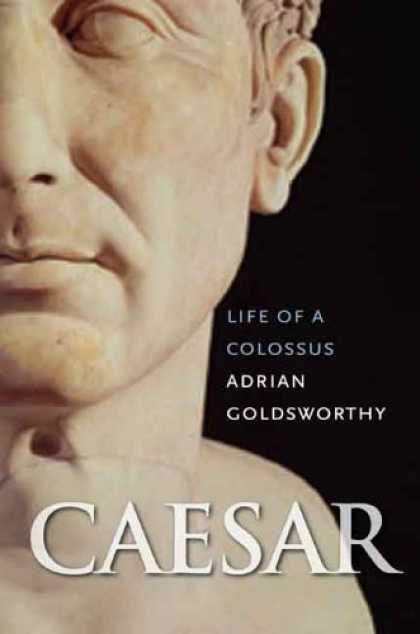
Caesar: Life of a Colossus - Part 2

Legendary Commander

Once Caesar becomes consul and leaves to govern over Gaul (modern France), the book really kicks into high gear and doesn't relent in awesomeness until the final page. That is not to say that the first third is bad by comparison, just that it is difficult to read if you don't have a basic understanding of ancient Roman politics. Anyways, the other two-thirds of the biography focus on Caesar's famous campaigns in Gaul, his execution of the Civil War against Pompey, Cato, and Scipio, and then, finally, his brief reign as head of Rome before his assassination at the hands of Brutus and Cassius.
.

Wars in Gaul

Caesar's campaigns in Gaul were the stuff of legend. Through sheer grit and determination, Caesar managed to wrest control over the entire region from enormous barbarian armies and into Rome's sphere of influence. It was not uncommon for Caesar to face armies that outnumbered his own ten times over. It was also not uncommon for supposed allies of Rome to support these enemy armies due to resentment of Roman power. People in the region feared Rome's expansion and, while they would play meekly when Caesar and his legions were around, many would support anyone willing to take on Caesar and hopefully kick him out of Rome.

But none succeeded. Only the famed chieftain, Vercingetorix, came even close. The fact is that Caesar was a masterful commander who had that perfect blend of love and respect from his men. He knew how to discipline them and he also knew how to make them work for his approval. By the end of the Gallic wars, these were soldiers who would follow their commander to Hades and back. Another contributor of Caesar's epic victories was his careful working of enemies against each other. Though most of them resented Rome's presence, most tribes were more than eager to jump on old foes with Roman help, even if they might have been better served by allying together against the threat of Caesar.
.

The Civil War

But what was, perhaps, even more amazing was Caesar's war against those who represented the old Roman Republic, led by Pompey the Great. This war ended with Caesar having fought his enemy in every continent known at the time, with battles in Italy, Greece, Egypt, modern Tunisia, and Spain. Goldsworthy depicts one battle after another at a breakneck pace, making the pages fly while simultaneously managing to make each conflict clearly understandable. At the same time, we are given points of view of every major player: of Mark Antony, monitoring the city of Rome while Caesar is away; of Pompey, whose army dances just out of reach of Caesar's in an effort to deprive it of supplies and morale...

And, of course, we are given the grand focus on Caesar himself who somehow managed to write entire books about his campaigns while controlling an army of tens of thousands and fighting all over the damn world. At one stage, he even managed to find the time to write a book on the obscure subject of Latin grammar. This restless energy came to define him and is part of what makes Caesar such a fascinating figure. When the wars died down and Caesar was finally able to return to Rome, he put that energy to use in creating policies that would restore Rome to its former grandeur while simultaneously giving power back to the people. But, sadly, it was this very noble objective that put Caesar in the target sights of Rome's most prominent senators.
.

Conclusion

It is important to note that, while this biography definitely comes down on the side of making Caesar sounds like a benevolent, genius, powerful badass, it is also fair in how Caesar is represented. Goldsworthy doesn't shy away from pointing out the times where Caesar allowed massacres to happen, crucified people to make examples out of them, and made no effort to truly restore power to the senate after taking control of Rome (it was this, in addition to the pro-poor policies, that brought on Caesar's assassination). This gives us a balanced view of the man that indicates that, while this was a man loved by his soldiers and the people of Rome, he also would be considered amoral by our standards and extraordinarily opportunistic.

In the end, I loved this biography in every part. I had enough knowledge of Roman politics to understand and enjoy the first third, and I had more than enough interest in ancient military warfare and examples of leadership to sail through the rest. In short, this was a biography fully designed to appeal to my own personal interests, and thus is near the top of my favorite biographies of all time.

However, I fully recognize that anyone without an interest in the diplomacy and warfare of ancient times wouldn't care for this book in the slightest. For those people, I would not recommend it. But if your lack of knowledge on Roman politics is the only hurdle, then I would recommend this book regardless. Goldsworthy does a fair job of describing how the Roman state worked and this is effectively supported by a very helpful glossary. And, if that first third proves too difficult to understand easily, then I would actually suggest skipping it to get to Caesar's campaigns. It is through these that we really get a measure of the man as well as a more exciting and better paced tale.

Caesar: Life of a Colossus - Part 1


More than perhaps any other, Julius Caesar stands out in ancient history as one of the most well-known figures of the time. And, boy, it was a time for legends. The average person still remembers stories of Hannibal's elephants crossing the mountains into Italy. We still, today, talk of Alexander the Great's conquest of the known world, pushing himself to the limit and beyond in an effort to surpass the efforts of the gods. But it is debatable that even Alexander could match Julius Caesar's influence on history. Caesar brought Gaul under his heel, marched on Rome, successfully fought a bloody civil war across three continents, and replaced the Roman Republic with an empire that lasted over a thousand years. He revolutionized warfare, was one of the first benevolent rulers, and did what was unheard of up to this time: created policies that benefited the freedoms and plight of the average citizen instead of the wealthy. It was for this reason that he was assassinated; people in power just couldn't handle the concept of presenting laws and legislation that specifically helped the blue-collar members of society.
.

The Writing

Part of what made this biography so appealing was the skilful description of a time far beyond our memory. Though we do have a fair amount of source material of Caesar's life and his era, it is important to note that the sources of the ancient world were often incredibly biased, had little problem plagiarizing the crap out of each other, and were flexible on the facts. Despite this hurdle, Adrian Goldsworthy succeeds in giving us a narrative that is often genuinely exciting to read. It is very rare for a biography to bring you into the writing so well that you feel as if you are there; this is far more common in the tales of fiction. But Goldsworthy accomplishes this nonetheless. I felt as if I could see battles unwinding before my eyes. I could see Caesar dismounting from his horse, talking to his men, bonding with them, and preparing to face foes with numbers far outstripping his own.
.

Consul of Rome

The biography follows Caesar's life chronologically. This works out so that the first third of the book follows the political life at Rome, the peculiar and bloody squabbling of senators, and Caesar's slow rise to power as a Consul of Rome (one of two heads of executive power). I honestly must point out that this is the toughest portion of the book to follow, at times. Unless you have a preexisting base of knowledge about Roman politics, it can be difficult to make sense of some of the events as they occur. Thankfully, this hurdle is largely handled by the existence of a very helpful glossary at the back of the book.

Part of what makes it a bit tricky to follow was that ancient Roman political life was very bizarre compared to our own, and this biography makes that fact quite clear. It was not uncommon for senators to gather gangs and kill one another if there was a sufficiently intense reason for disagreement. In Rome, there was an omnipresent fear of one man gaining enough influence with the people to appoint himself monarch by force. This fear was so overpowering that it could make senators do things that would be really weird by our standards. For example, it was absurdly normal for important and helpful legislation to be blocked just because people feared that the person who had presented the laws would gain too much popularity. This caused senators to bar going to war to defend Roman territory, assigning missions to oppose pirates, and even allowing the census to be taken properly.

It was in this background of backstabbing and obstruction of sane policy-making that Caesar came to power. Given this backdrop, it makes sense that Caesar would consider the benefit of overthrowing said government later in life. For all of its nostalgic glamor, the Roman Republic of Caesar's time was rife with flaws and, at times, seeming to barely hold itself together.

Thursday, July 7, 2011

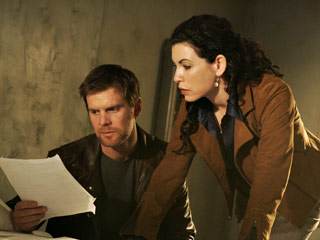
The Lost Room (2006)

by DionysusPsyche


“If I show you what's there, there's no going back. It will make you crazy.”

I could pretty much tell any potential viewer the same thing about this show. The Lost Room is a mini-series that cronicles a man's search for his missing daughter. This show better than Alice in Wonderland, because the deeper you go into the rabbit hole, the more you want to know. It revolves around paranormal objects in a very special space and their properties within and outside of that space.
Maybe you like seeing a watch boil your egg. Maybe you need to be safe from fire. Whatever the reason, there is an object that you could likely possess that would do you some good. Yet it comes with a price which could be a great as your life or as little as a stranger's. Like a reality show, the objects can bring out the worst in people, but in this series, I found myself having a hard time holding most people's vices against them.
While on the job, Detective Joe Miller (Peter Krause's) comes across a key. He is told this key unlocks any door. Unbelieving, Joe takes it home, you know, for safety measures, and tries it out. It works. The room in between that he enters is a motel room. Due to a run-in with people who are willing to kill for it, Joe's daughter takes the key and escapes into the room created in order to save herself from those dangerous people doing anything to obtain this precious treasure. She disappears when the key locks from the outside. In order to get her back, Joe sets out on a journey to learn as much as he can about the motel key, the motel, and the mysterious, magical objects within. Each object does something different from the last, and their effects are varied across the board.
Unsurprisingly, Joe is in serious competition with collectors. These people dish out some serious bucks in order to learn knowledge, not even get their hands on the objects, just to learn the whereabouts. Joe meets interesting, obsessed, and manipulative people who are all after the key and its other objects for their own personal reasons.
This show reminds me of a creative writing class, where you take a simple idea and are expected to churn out exceptional writing. Only instead of being in an English class, sitting in your desk, wracking your brain for ideas, you're sitting on the edge of your couch glued to the television.
Even if I thought about looking away or going to bed or eating or going to the bath room, I simply couldn't. The curiosity was paralyzing. My criticism for this show was that it ended too soon and seemed to tie up without necessarily answering all the questions I had. I still have questions! Now, it was intended to be only one season, and unlike The 4400, it only amounted to one season (those bastards should have renewed, damnit! Whatever the price). Yet, it remains so action packed, full of drama, and down right exciting. It's as if the whole thing was one convuluted car chase!
The acting is solid. While the characters don't necessarily reveal a lot about themselves, their motivation behind why they want the motel artifacts is, in and of itself, intriguing and telling. It is an eternal struggle for power, and the more one has, the more likely it is to be usurped from them. In a lot of series, people can often be broken down into two main groups: those who are manipulated and self-interested and those who seek justice and honor. In this series, there are a great many people who are defined solely by their weaknesses, by what they will do in some cases to even get a glimpse at an object. Joe is by far the hero of The Lost Room. With the heroic charm one might see in The Odyssey, Joe's mission is this: he wants his daughter back. That is all. No more, no less, and he'll go to the ends of the earth to do so.
Conclusion
It goes without saying that I am a television junkie. I find a show I like, and as a mosquito attaches itself to a host, I suckle at the teat of a series (guys, it's a SIMILE here!) until I've sucked it dry. For the most part, I can break away for the bath room, some food, or to go to bed. From the moment I saw the trailer, I was intent on watching the series, and while watching the series, I didn't dare get up for anything. I was even reluctant to pause the remote! I don't want to oversell this series and create disappointment, but I honestly have a hard time believing this series is capable of serious let downs, until, well, until it ends, and there is no more. This series is excellent, and I hope you find it as interesting and entertaining as I did.

Wednesday, July 6, 2011

Bioshock 2

For my review of the first Bioshock, click here.

Our culture has always had a fascination with the fall of empires. It permeates our literature, our poetry, and our visual entertainment. The poem Ozymandias by Percy Bysshe Shelley comes to mind; its theme is that all empires, and all leaders, will inevitably decline until forgotten. Our endless stories of Atlantis, our continual interest in how the Roman empire fell into ruin, our recurring fear that the United States of America will be replaced and diminished in time... It is indicative of our own fear of death and of being a mere footnote within history.
.

The Ruin of Dreams

The Bioshock series capitalizes on our interest in fallen societies by giving us the grand dystopia of Rapture. This underwater city was founded under the radical notion that capitalism and intellectual freedom could be given limitless reign, allowing scientists, artists, and geniuses to coexist and flourish without the distraction of laws, religion, and government. Theoretically enthralling, in practice it was doomed to failure, and this is reflected in your exploration of the place. In the first Bioshock, we enter Rapture for the first time and are blown away by the anarchy within. Andrew Ryan, its founder, has essentially become king of a dying city populated by genetically mutated shells of humanity. As he is deposed by the end of the game, we are able to see in detail how the society fell apart and how the grand idea behind Rapture was warped by the nature inherent in all humans.

In Bioshock 2, we return to Rapture, but not as a human. Instead, we are the original “Big Daddy”, prototype of the machines designed to protect the “Little Sisters” that populate Rapture. A Big Daddy is essentially a construct, once human, mutated by genetic manipulation to serve as golem guardians. Little Sisters are little girls warped and engineered to harvest the blood of dead people, which serves as valuable energy (known as ADAM). I could go into the why and how this duo was created, but I both don't want to ruin it for those who have yet to play the Bioshock games, and I also don't want to make this review too heavy on the details.

Your mission in Bioshock 2 is to reunite yourself with your own special Little Sister. To do this, you will tromp through the dark halls of the fallen city of Rapture, fighting to stay alive as the twisted denizens of this netherworld seek to claim your life. Set years after the events of the first Bioshock, the ruined nature of Rapture is even more evident now than it was then. The place is falling apart as the ocean seeks to reclaim its territory. Lights flicker and then fall silent. Windows crack and burst, letting the wrath of the water outside come flowing in. It is creepy, horrible, and yet compelling. The place is a mere shadow of its former self, yet you can't help but wonder what Rapture was like in its golden age, before everything fell apart. To this point, the city and the ocean seem to become characters of their own, and you can't help but feel for them.
.

Father and Daughter

As if the exploration of one man's ruined vision is not enough, the story of Bioshock 2 is perhaps even more intriguing. Though you are a Big Daddy, an automaton without the ability to think or speak beyond your need to find your Little Sister, you can't help but be drawn into the intensity of your objective. Not any Little Sister will do; your goal is to reunite with your own special Little Sister. Her name is Eleanor and, as the story progresses, you learn of her background and your own. As time passed, I found myself becoming incredibly protective of this girl and all the others. In a city as anarchic and dangerous as Rapture, it becomes clear that you are one of the only things standing between these children and a gruesome, painful death. I can still remember the first time I had to defend one of the Little Sisters from an onslaught of creatures; the moment she screamed as one of the enemies hit her, I went into berserk mode. Where previously I had been carefully conserving ammo and monitoring where the enemies were coming from, I snapped. I stood over the girl and sprayed ammo in all directions, never minding conservation or caution. I lost track of how many enemies were coming or where they were coming from. Never mind preparation. It was just me between the Little Sister and a circle of foes.

It speaks to the power of this game that it can create such a relationship between you and these twisted little creatures that aren't even real. And I'm just speaking of one of the Little Sisters, whom you defend and then never see again. As for your Little Sister, Eleanor, you will literally feel like her father by the end of the game. God help anything that gets between you and her. It is one of the more intense character arcs that I've seen in video games, which is quite impressive considering you never even speak. It is also worth noting that, as far as I can recall, this is the only video game I've ever played that explores the relationship behind fathers, mothers, and their children. It is deep, varied, and effective. And it is what makes Bioshock 2 one high quality game.
.

Conclusion

As for the gameplay, it is a polished refinement of the first game's. You still have dozens of weapon and plasmid variations to choose from. You can still set up areas to ambush enemies. You can still turn foes against one another and then clean up the aftermath. In a fashion, this is Bioshock 2's failing; the game itself has not changed much outside of the characters, story, and the further ruination of Rapture. But to call it a failing would imply that the gameplay had a problem to begin with, which it does not. I still had an enormous amount of fun playing it. But I do wish, a little bit, that the game designers had been more ambitious in making some more interesting changes to how the gameplay pans out. However, this feels like a really small issue considering how much I enjoyed the result.

One last thing I almost forgot to mention is the political message behind Bioshock 2. The first Bioshock is a critique of Ayn Rand's Objectivist philosophy and the concept of hypercapitalism. The upcoming Bioshock: Infinite looks like it will be a criticism and analysis of American exceptionalism and hard right-wing politics. Bioshock 2 focuses on socialism and its negative extremes. It is interesting to note this trend among Bioshock games. And, being the politics and history nerd that I am, I can't help but be engrossed by these games as a result.

All in all, I would highly recommend this game to anyone who has played the first, loved the gameplay, and has an interest in complex themes in your entertainment. This game has definitely guaranteed that I will play every Bioshock to come, and I'm still enthralled with the parental themes behind this game. If any of this review piqued your interest, then you should definitely check it out too. It isn't one to miss.

Tuesday, July 5, 2011

League of Legends

Written by Joe the Revelator


For a game that started as a knockoff of Warcraft III's champion maps, LoL (League of Legends) has done well for itself. Its servers are frequently jammed to capacity. Comic strips about LoL have popped up on Penny Arcade and Ctrl+Alt+Del. LoL also holds cash reward tournaments on a scale comparable to Starcraft, and has been represented at both Dreamhack and Pax. And the amazing part? LoL is free.

Well...almost free. To download and play LoL is free, and there are free champions (playable characters) made available every week through a rotating roster. What if you want to own the champion you've been playing? You can purchase them with the influence points you earn during gameplay. Runes are similarly bought with influence points. Character skins and account goodies, however, cost real money. And champions who demand between 3,000 and 6,000 influence points to own can be yours for about 10 bucks on a game card.

To put things into perspective, an in-game match can last 30 to 60 minutes, resulting in an "IP" boost of 30 points for an easy game against bots, or around 300 points for a drag-out ass-kicking 5v5 player match. Losing a game earns about half the points. So if you figure on an hourly average of 150 influence points (being generous), you'll be in it for 20 hours before you can afford a medium-expensive champion, and double that for the priciest of persona.

40+ hours of gameplay for that high-priced wicked looking assassin, or a 10 minute walk to the 7-11 gamecard rack?


Mind-Numbingly Delightful

So you've been playing for a week or so and purchased your first champion, what can you expect from League of Legends? So-so graphics, simple team style gameplay, and pages upon pages of champions to browse through, each with their own back stories, which are largely ignored. Between level 1 and level 10 you'll be playing against other newbies, everyone jamming their four champion skills at innapropriate times and fumbling around the map. It's hilarious and chaotic. The controls are largely Warcraft III, as I've mentioned, so DoW and SCII players will also feel at ease with the top-down strategy of LoL.


Once you've earned your summoner spurs (summoner meaning you, the player), you'll be expected to buy runes and spend mastery points to advance your champion's powers. You'll also learn some new LoL lingo, like AP and AD and carry, MIA, Gank, and Tower Dive. It'll be your responsibility to choose a champion that synergizes with the rest of the group. A team of 5 tanks or 5 magic casters, for the most part, will die screaming. Balanced teams who communicate with each other and have some notion of how to purchase in-game items do well, earn IP, and buy more champions and runes. Success breeds success.

Stunning another player with a volly of spells, setting them on fire, and watching them flee while the flames end their life, brings a certain satisfaction to your day. So does jumping out of the pixlated bushes and mashing your "ultimate skill" button, so the last thing your enemy hears is "DEMACIA!" as a giant sword descends from the sky. The greatest gift of LoL is seeing others run from you in fear after they've died at your hands once or twice. But when it's your team losing, when the enemy caster has been "fed", the blame game begins.


The blame game, thy name is LoL:

Being "fed" means an enemy has died to you so often, usually 3 or more times in 10 minutes, that you've already leveled higher than your teamates, and have bought a few items with the gold you've scraped off their corpse. If you're the one who did the feeding, it can mean swift defeat. The most demoralizing aspect of LoL comes from the chat window of a losing team. They blame each other for buying the wrong items, for misusing their champion's skills, for feeding the enemy, for not calling MIA enemies, or for simply not playing to expectations.

And the merrits of your score can have little to do with the arguement. Defending yourself because you've made more kills than the person accusing you can actually be damning, since some champions arn't built to be killers. A tank with too many kills hasn't done his job properly of keeping everyone else alive, and a "tower pusher" with too much blood on their weapon has been neglectful of pushing the battle lines into the enemy base.


Victory, of course, brings about no such arguements. But defeat in LoL can unleash the most verbally abusive shut-ins who ever touched their sweaty manhands to the homerow keys, unchecked by a team who simply wants the match to end so they can collect their pity-points and move on to the next match. There's a 'Report' function for abusive players, but it goes untouched more often than not. Abuse and blame have become so ubiquitous in early LoL levels, it's almost expected as a tool for edcuating the other players. Besides, they're the ones who fed, right?


My tank is fight. Your tank has fed.

My recommendation for LoL comes with the warning that you grow thick skin. Team tactics and communication become paramount later on, and between levels 1 and 30 you'll see a lot of blame, a lot of backstabbing, and a lot of juvenile behavior. But it's a fun ride along the way, and once you settle on a few champions, read the lore of LoL, and climb to the max summoner level, you will have risen above the pettiness of the early games. The players who'd rather blame others than improve their own tactics rarely make it to 30. And from there, with a few friends on your side, the matches can get really intense.